I am not a surgeon, but I think when an orthopedic surgeon looks at an X-ray of an injured wrist, they aren’t actually looking for a break first. They are looking at the negative space: the tiny, dark gaps between the bones where nothing is supposed to be. If that empty space is a millimeter too wide, it means a ligament has torn. The injury isn’t visible in what is there; it is revealed by the shape of what is missing.
I have come to think that most of us carry an invisible injury that works the exact same way.
If you open the notes app on your phone right now and scroll all the way to the bottom, past the grocery lists from three years ago, the Wi-Fi passwords for apartments you no longer visit, and the measurements for a couch you ended up selling, you might eventually find a graveyard of half-built lives.
There might be a single line from 2022 or something that says something like “Check flight prices to Lisbon (or that place you always wanted to go).” Or a bulleted list of names for a business you never kick started. Or a three-sentence draft of a message to someone whose voice you are still trying not to hear in your head, written in the wee hours and never pasted into a chat window.
We have a vast, well-rehearsed vocabulary for grieving things that existed and ended. When a marriage dissolves, when a parent dies, or when you pack up a cardboard box at a job you gave a decade to, the world knows how to stand next to you. There are rituals for things that had a beginning and an end. You get to hold a funeral or shed a tear for what was real.
However I am not sure if anyone really told us what to do with the weight of an almost.
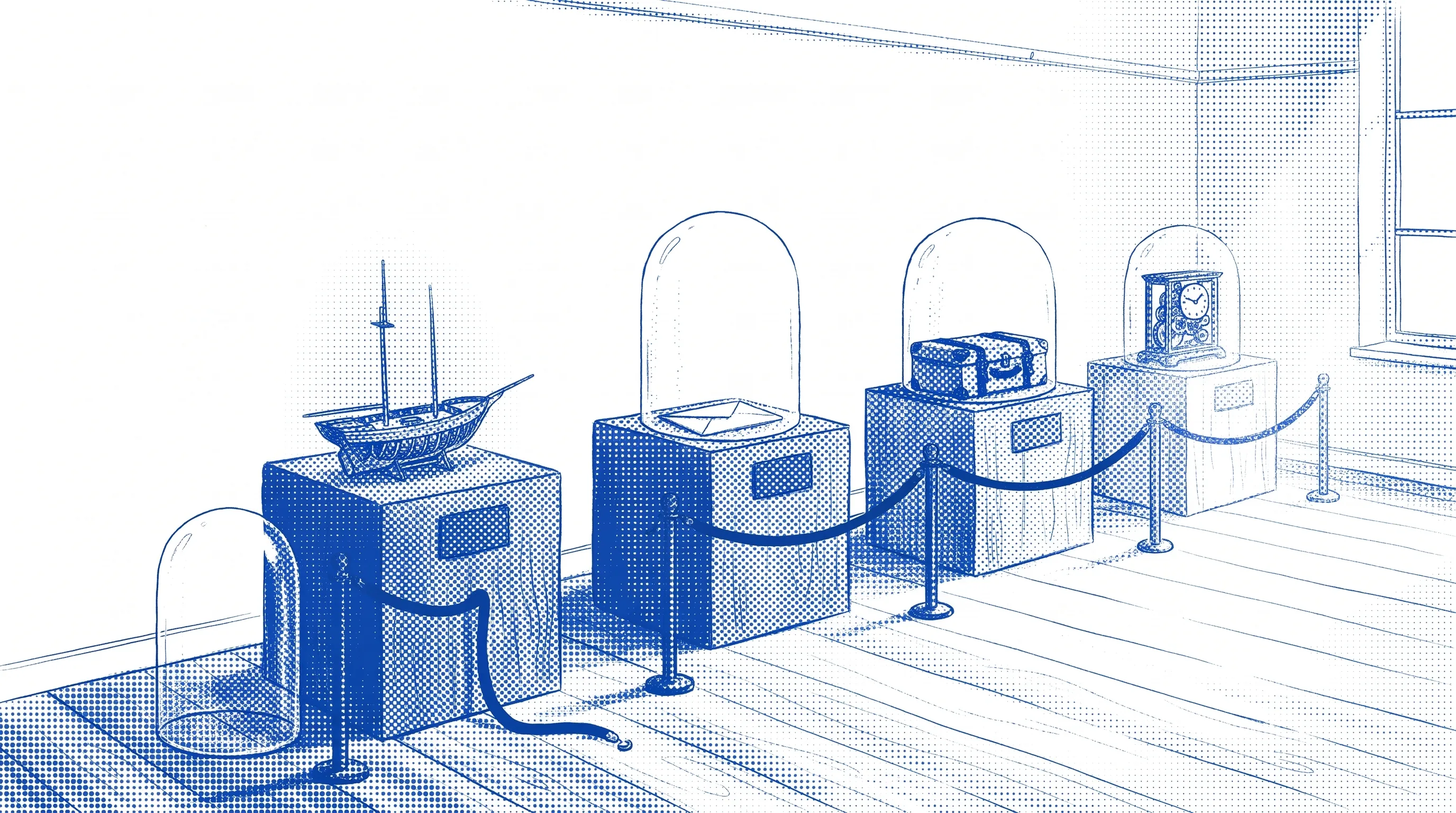
An almost is a seductive kind of ghost because it never had the chance to bruise you. So we actually start collecting them on purpose. Without realizing it, we become curators of our own hesitation.
Think about how safe an almost is. As long as the company only exists as a bulleted list in your phone, the market can never reject it. As long as the move to another city is just a saved chrome bookmark, you never have to sit alone in an unfurnished apartment wondering if you made a terrible mistake. As long as the confession stays in your drafts, the person you love can never look at you with polite pity and say they don’t feel the same way.
Staying on the edge of the diving board feels like a neutral state. We tell ourselves we are “being pragmatic,” or “waiting for Q3 to settle down,” or “just doing a little more research.” We disguise our terror as timing.
The cruelest trick your brain will ever play on you is convincing you that standing still is free. It isn’t. You are paying for it every single day, just on a deferred payment plan.
You pay for it in those unannounced transitions, the strange days when you realize the door you kept meaning to walk through has rusted over while you were busy rehearsing your excuses. You realize you are no longer “preparing to pitch that idea”; you are just someone who watches younger, less talented people build the thing you thought of three years ago. You aren’t “waiting for the right moment” to have that terrifying conversation; you have simply waited so long that there is nothing left to salvage.
Fear tries to sell you a bargain: Give up the leap, and I will protect you from the fall.
Fear leaves one thing out of the deal: the dull, chronic ache of wondering what if for the next decade or more is a thousand times heavier than the sharp, short sting of trying and failing. You can recover from a bruised ego, a lost deposit, a bombed presentation, or a broken heart in a matter of months. The psychologists Thomas Gilovich and Victoria Medvec actually found this when they studied regret: in the short term we regret the things we did more, but over the long run it’s the things we didn’t do that stay with us.
Go back to that graveyard at the bottom of your notes app. Most of what’s in there is done, and it’s fine to let those entries rest (I have a few in mine I stopped feeling guilty about years ago, and the world carried on).
There’s probably one in there that still has a pulse, though, because you’re avoiding it right now. You most likely know which one. It came to mind the moment you read the words Give up the leap, and if you’re anything like me you scrolled a little faster to get past it. Maybe it’s the conversation you keep moving to next month, or the project you keep polishing in private so nobody gets a chance to judge it. Or it’s the change you have researched for so long that the research started to feel like progress, mostly because reading about a thing lets you feel like you’re moving without ever having to risk anything.
I would rather that one didn’t end up as another exhibit in the museum. Looking a bit foolish in front of a few people is unpleasant, and it passes, usually much faster than you expect. Carrying around a version of your life you never checked on doesn’t pass, and more often than not it gets heavier the longer you leave it sitting there.
So go and look at the thing that’s scaring you, whether it’s the email, the pitch, the blank page, or the person you have been meaning to talk to. The almost feels safe mostly because nothing inside it ever has to be tested. Whatever happens when you try will probably be messier than you would like (mine usually are), but you will at least know what it was, and you can stop guarding it. Send that one-line email, write that rough first page, and let yourself be a beginner—because the fall will never hurt as much as the waiting.